



Accessing formal credit in Nigeria has long required a smartphone, internet connection, and established bank footprint. Those digital prerequisites left millions of small-scale traders and informal workers locked out of the financial system.
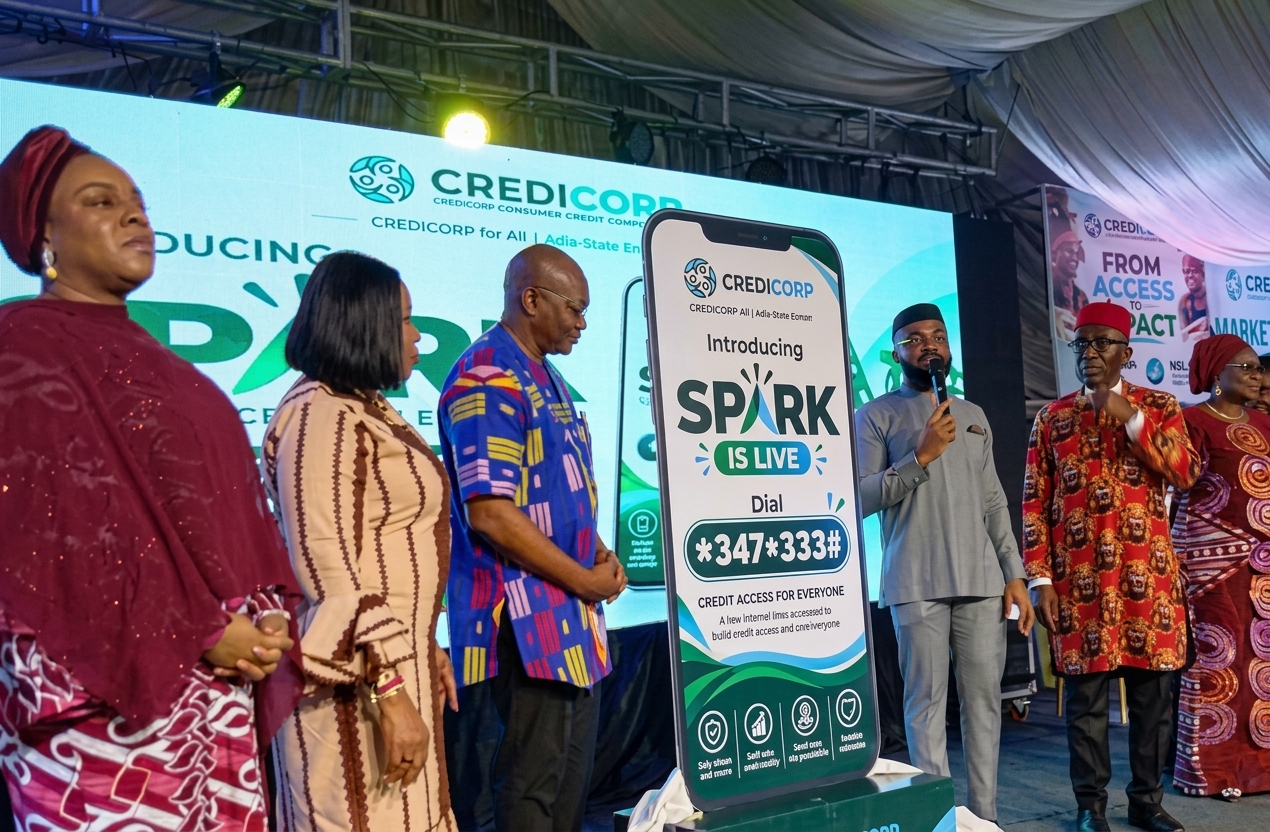
The Federal Government move to bypass those barriers came through the Nigerian Consumer Credit Corporation. Operating under the brand SPARK, the newly introduced USSD credit facilitation service allows citizens to apply for financial products directly from basic feature phones without requiring data or internet access.
Unveiled by CREDICORP during the “CREDICORP for All” showcase event in Aba, Abia State, the platform represents a major structural shift in how consumer credit is deployed across the country.
Why Did the Federal Government Choose the USSD Route?
The decision to deploy consumer credit through Unstructured Supplementary Service Data stems from telecom infrastructure realities.
While smartphone adoption across urban centers continues to grow, feature phones remain the dominant communication tool for millions of rural workers, informal traders, and low-income households. Mobile app-based lending platforms default to internet connectivity, which automatically excludes a massive percentage of the population from accessing formal credit windows.
USSD technology operates over basic GSM networks. By building SPARK on a text-based protocol, the government eliminates hardware inequality, allowing anyone with a working phone line to submit loan applications.
What Is the Official USSD Code for SPARK?
The official USSD code for accessing the SPARK platform is *347*333#.
Applicants can dial the number on any mobile device across participating domestic telecommunications networks. The code launches an interactive text menu that guides users through account registration, credit assessment steps, and partner financial institution options.
CREDICORP advised citizens that while the code was formally introduced during the pilot launch in Abia State, full commercial functionality is rolling out in structured operational phases.
Understanding What SPARK Is and What It Is Not
A critical operational boundary defines the SPARK initiative: it is a structured commercial loan facility, not a government grant or welfare handout.
The scheme does not distribute free funds. Beneficiaries are legally and financially obligated to repay disbursed funds along with interest according to agreed schedule terms.
SPARK operates as a credit facilitation bridge rather than a direct lender. CREDICORP acts as a government development finance institution that provides wholesale funding, risk-sharing guarantees, and technical integration to participating private financial institutions.
Those partner banks and microfinance institutions underwrite the risk, disburse the actual funds, and collect repayments.
How SPARK Helps Low-Income Earners Build Credit Histories
In traditional banking, lack of a formal credit score presents a catch-22: banks refuse to lend without a track record, but individuals cannot establish a track record without initial access to credit.
SPARK breaks this cycle by integrating alternative data points to assess initial creditworthiness for first-time borrowers. The platform evaluates basic identity verification alongside phone usage patterns and transaction footprints to issue small initial credit allocations.







Comments0
Sign in to join the conversation
Share your perspectives and engage with other readers.